What Raw Materials Can Be Used to Make Activated Carbon?
Activated carbon isn't made from a single, special substance. It can be produced from almost any organic material rich in carbon. The true test of a good starting material is whether, after processing, it can form a vast, intricate network of internal pores—the microscopic tunnels that give activated carbon its powerful adsorption ability.
These raw materials broadly fall into two major categories, each producing carbon with distinct characteristics suited for different jobs.
Category 1: Plant-Based Materials (The Renewable Workhorses)
This is the most diverse and widely used group, leveraging nature's own fibrous structures.
Wood & Bamboo: Sawdust, wood chips, and bamboo are common, cost-effective sources. They typically produce activated carbon with a good mix of pore sizes, excellent for general purposes like air filtration or wastewater treatment in municipal and industrial plants.
Nut & Fruit Shells: This is where some of the highest-quality activated carbon originates. Coconut shells and palm kernels are particularly prized. They yield an extremely hard, dense carbon with a very uniform microporous structure, making it the top choice for demanding applications like drinking water purification, food decolorization, and gold recovery in mining.
Other Agricultural By-products: Materials like olive pits, peach stones, and rice husks are also viable. Using these turns waste into a valuable product, though the resulting carbon's properties will reflect the specific ash content and structure of the original shell or husk.
Category 2: Coal-Based Materials (The Industrial Powerhouses)
Coal has been a traditional feedstock for large-scale activated carbon production for decades.
Types Used: Various ranks of coal are used, primarily anthracite (hard coal), bituminous coal, and lignite (brown coal).
Resulting Carbon Properties: Coal-based carbons are known for their high mechanical strength and a broader range of pore sizes, including more medium-sized pores (mesopores). This makes them exceptionally good at adsorbing larger molecules and contaminants, which is why they are heavily used in industrial gas purification, solvent recovery, and metallurgy.
The Transformation Process: It's All About Creating Pores
No matter the starting material, making it "active" follows a two-stage alchemy:
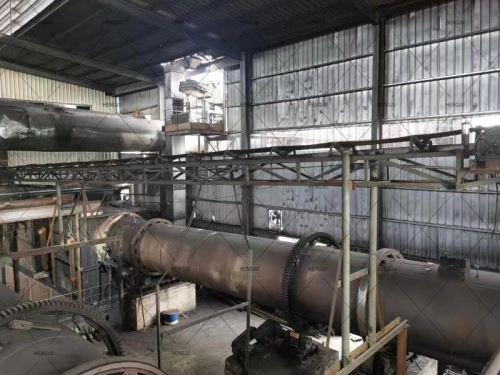
Carbonization: The raw material is heated in a low-oxygen environment to around 400-600°C. This drives off water and volatile gases, leaving behind a fixed carbon skeleton—basically, pure but non-porous char.
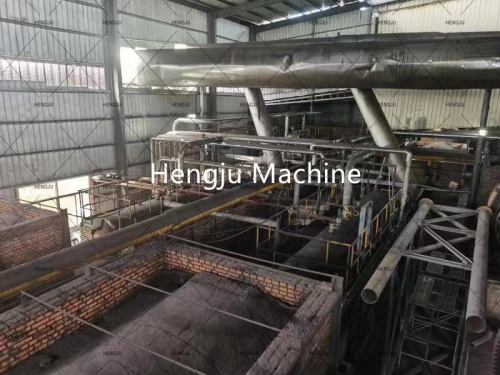
Activation: This is the critical step that etches in the pores. In physical activation, the char is treated with superheated steam or CO₂ at 800-1000°C, which gasifies parts of the carbon to create the porous network. In chemical activation (common for wood), the raw material is impregnated with agents like phosphoric acid before heating; the chemical corrodes the structure at a lower temperature, creating porosity as it decomposes.
The Bottom Line: Your Application Chooses the Material
The "best" material depends entirely on the end use. Need a ultra-pure, hard carbon for extracting gold or filtering vodka? Coconut shell is the answer. Need a tough, broad-spectrum carbon for scrubbing industrial smokestack gases? A coal-based product is likely the most effective and economical choice. The art of activated carbon manufacturing lies in matching the innate structure of the raw material to the specific adsorption challenge it needs to solve.
Copyright: Copyright belongs to Hengju Machinery! Reprint please indicate the source: https://www.hengjumachinery.com/industry-news/what-raw-materials-can-be-used-to-make-activated-carbon.html
Needs Help? Let’s Get in Touch