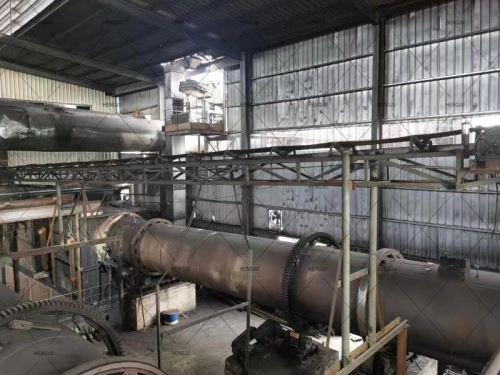
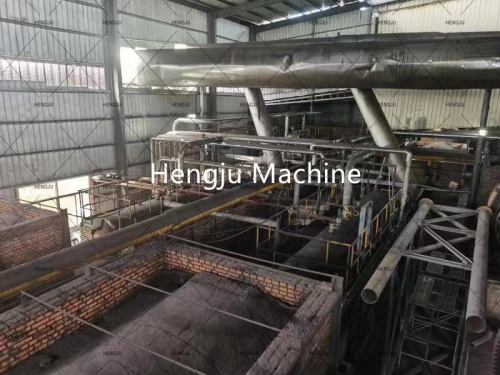
How Does a Carbonization Furnace Work?
The starting point of carbon production is creating a qualified carbon "blank," a process known as carbonization. Simply put, the goal of carbonization is not to burn the raw material into ash, but to use high temperature in an oxygen-deficient environment to drive off all the easily volatile components from the raw material, leaving behind a basic skeleton composed mainly of carbon.
Step 1: Drying and Preheating
Once the raw material enters the furnace, it first undergoes drying. The temperature gradually increases from ambient to about 150-200°C. In this stage, the main action is evaporating the internal moisture from the raw material, preparing it for the next phase of true pyrolysis. It's akin to drying firewood before burning it.
Step 2: The Key Pyrolysis Stage
When the temperature rises above 250°C, the real chemical reactions begin. In an environment with little to no oxygen, organic components in the raw material like lignin and cellulose start to be "broken down" by the high heat.
This process is crucial. The raw material does not catch fire and burn; instead, it decomposes under the intense heat. You will see smoke being produced, which contains water vapor, wood tar, acetic acid, and some combustible gases. As the temperature climbs to 400-700°C, these volatile substances are continuously and thoroughly driven off. The remaining material shrinks in volume, turns black, and becomes what we call carbonized material—a brittle, hard, porous carbon structure.
The core principle is oxygen control: the furnace introduces a small amount of protective gas, such as steam or combustion exhaust, to ensure there is not enough oxygen inside to support combustion. This guarantees the raw material is "pyrolyzed" into carbon, not "burned" to ash.
Step 3: Cooling and Carbon Discharge
Once the volatile substances are sufficiently removed, the hot carbonized material needs to be carefully cooled. If exposed directly to air at this stage, it could oxidize or even spontaneously ignite due to the high temperature. Therefore, cooling is typically done slowly in an oxygen-free environment, for instance, using indirect water cooling in a sealed cooling section. After cooling, stable carbonized material is produced.
Summary
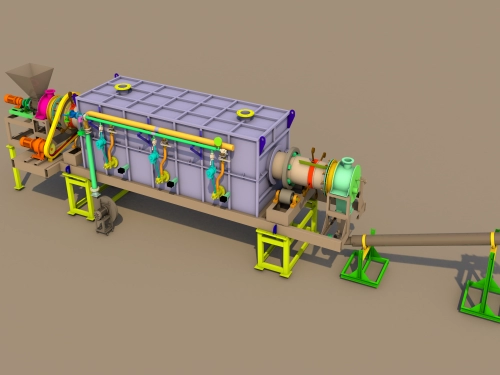
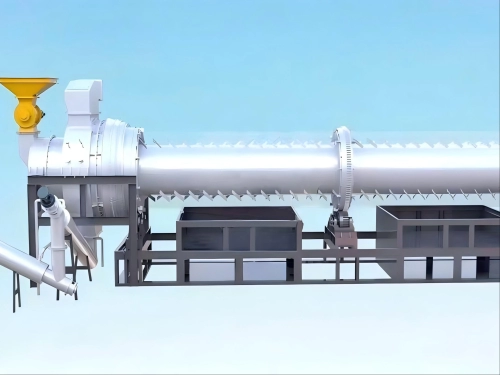
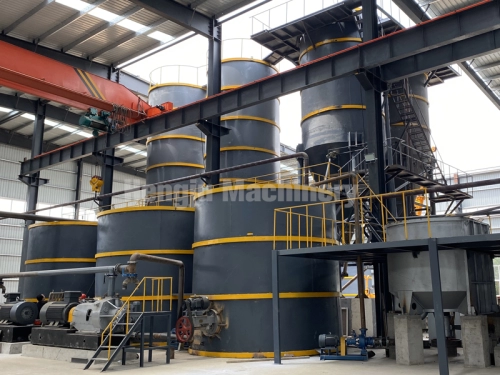
To summarize: You can think of a carbonization furnace as a large, strictly oxygen-controlled "oven." Its core function involves three steps: first drying, then using high heat in an oxygen-deficient environment to "bake" the raw material until it decomposes, driving off all the "impurities," and finally safely cooling the resulting carbon block. The carbonized material obtained this way is like the initial, raw form of a sponge—it already has a porous framework, but its adsorption capacity is still very weak. It requires a subsequent "activation" process to truly open up and enlarge the internal pores, ultimately transforming it into highly effective activated carbon.
Copyright: Copyright belongs to Hengju Machinery! Reprint please indicate the source: https://www.hengjumachinery.com/industry-news/how-does-a-carbonization-furnace-work.html
Needs Help? Let’s Get in Touch