Why is the Flat Die Pellet Mill an Ideal Choice for Flexible Production?
Article Details
In the field of biomass pellet production, when needs lean towards flexibility, diversity, and moderate scale, the flat die pellet mill often demonstrates its irreplaceable core advantages. It is not merely a scaled-down version of the ring die model in terms of power, but a solution with unique characteristics in both design philosophy and application scenarios.
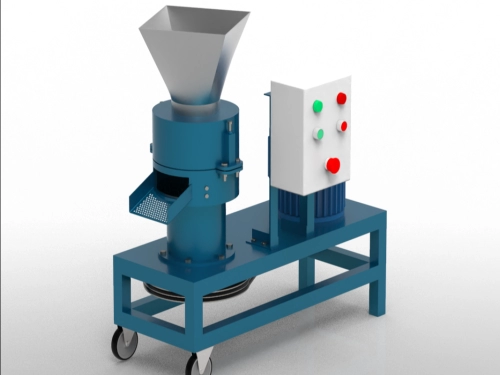
The core advantages of the flat die pellet mill are first rooted in its simple and intuitive design. Its die is a horizontally placed, perforated disc. Press rollers travel across its top surface, compressing material vertically downward through the die holes to form pellets. This principle of vertical compression gives it greater tolerance for raw materials. It is particularly well-suited for processing diverse types of biomass with characteristics like low bulk density, inconsistent fiber structure, or slight adhesiveness—such as sawdust, bamboo powder, and certain agricultural stalks. This inherent structural characteristic grants it excellent raw material adaptability and production flexibility.
The vertical feeding and compression nature of the flat die mill reduces the distance material needs to be conveyed before pelleting, lowering the risk of clogging. For small-to-medium farms, woodworking workshops, or R&D units, raw material sources are often unstable or mixed. The flat die mill can, with relatively simple adjustments, quickly switch to producing pellets of different specifications or materials. This level of flexibility is difficult for large, continuous production lines to match. It allows users to start production based on readily available resources, quickly converting scattered biomass into valuable products.
The initial purchase cost of a flat die pellet mill is significantly lower than that of a ring die model with comparable capacity, reducing the upfront financial pressure for startups or equipment additions. Furthermore, its requirements for infrastructure are more accommodating. Some small-to-medium models can operate on stable single-phase power, lessening the reliance on industrial three-phase electricity and simplifying installation conditions. Finally, regarding maintenance, inspecting, cleaning, and replacing its horizontal die is typically more straightforward and convenient, helping to reduce daily maintenance time and labor costs. This makes production and operation more agile.
The design of the flat die pellet mill emphasizes user-friendliness. Its operational logic is intuitive, and its startup and shutdown procedures are relatively simple, making it easier for newcomers to learn. When changing pellet specifications or performing maintenance, the horizontally positioned die makes access and disassembly more convenient, without the need for complex specialized tools or extensive disassembly of surrounding structures. This ease of use makes it especially suitable for small-to-medium users who may not have dedicated engineers but need to operate and maintain their production line independently.
In summary, the flat die pellet mill precisely serves core scenarios involving medium-to-small scale, diverse production, and limited initial investment. It foregoes the pursuit of maximum output and extreme continuity, trading it for valuable flexibility, cost-effectiveness, and ease of use. If your production also requires a machine with lower upfront costs and flexible operation, feel free to consult Hengju Machinery.
With years of experience in the wood pellet machine manufacturing sector, Hengju Machinery can customize flat die pellet mills according to your specific raw material needs. We welcome your inquiries.
The core advantages of the flat die pellet mill are first rooted in its simple and intuitive design. Its die is a horizontally placed, perforated disc. Press rollers travel across its top surface, compressing material vertically downward through the die holes to form pellets. This principle of vertical compression gives it greater tolerance for raw materials. It is particularly well-suited for processing diverse types of biomass with characteristics like low bulk density, inconsistent fiber structure, or slight adhesiveness—such as sawdust, bamboo powder, and certain agricultural stalks. This inherent structural characteristic grants it excellent raw material adaptability and production flexibility.
The vertical feeding and compression nature of the flat die mill reduces the distance material needs to be conveyed before pelleting, lowering the risk of clogging. For small-to-medium farms, woodworking workshops, or R&D units, raw material sources are often unstable or mixed. The flat die mill can, with relatively simple adjustments, quickly switch to producing pellets of different specifications or materials. This level of flexibility is difficult for large, continuous production lines to match. It allows users to start production based on readily available resources, quickly converting scattered biomass into valuable products.
The initial purchase cost of a flat die pellet mill is significantly lower than that of a ring die model with comparable capacity, reducing the upfront financial pressure for startups or equipment additions. Furthermore, its requirements for infrastructure are more accommodating. Some small-to-medium models can operate on stable single-phase power, lessening the reliance on industrial three-phase electricity and simplifying installation conditions. Finally, regarding maintenance, inspecting, cleaning, and replacing its horizontal die is typically more straightforward and convenient, helping to reduce daily maintenance time and labor costs. This makes production and operation more agile.
The design of the flat die pellet mill emphasizes user-friendliness. Its operational logic is intuitive, and its startup and shutdown procedures are relatively simple, making it easier for newcomers to learn. When changing pellet specifications or performing maintenance, the horizontally positioned die makes access and disassembly more convenient, without the need for complex specialized tools or extensive disassembly of surrounding structures. This ease of use makes it especially suitable for small-to-medium users who may not have dedicated engineers but need to operate and maintain their production line independently.
In summary, the flat die pellet mill precisely serves core scenarios involving medium-to-small scale, diverse production, and limited initial investment. It foregoes the pursuit of maximum output and extreme continuity, trading it for valuable flexibility, cost-effectiveness, and ease of use. If your production also requires a machine with lower upfront costs and flexible operation, feel free to consult Hengju Machinery.
With years of experience in the wood pellet machine manufacturing sector, Hengju Machinery can customize flat die pellet mills according to your specific raw material needs. We welcome your inquiries.
Copyright: Copyright belongs to Hengju Machinery! Reprint please indicate the source: https://www.hengjumachinery.com/industry-news/why-is-the-flat-die-pellet-mill-an-ideal-choice-for-flexible-production.html
Submit Question
Needs Help? Let’s Get in Touch
Recommended
Wood Pallet Shredder: Ultimate B2B Buying Guide for Waste Pallet Recycling Keywords wood pallet shredder, pallet crusher, nail wood pallet shredder, industrial pallet shredder, waste pallet recycling machine, heavy duty wood shredder Meta Description Look
Looking for a reliable wood pallet shredder for your warehouse or recycling plant? This B2B guide co
Pellet Machine Maintenance Guide & Common Fault Solutions | Reduce Downtime & Extend Service Life
Scientific daily maintenance is the key to keep pellet machine stable for a long time and extend ser
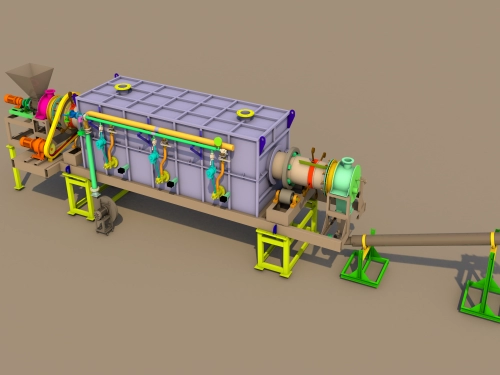
What Is Activated Carbon Regeneration Furnace? Working Principle, Process & Core Functions
Our industrial activated carbon regeneration furnace restores adsorption capacity of saturated carbo
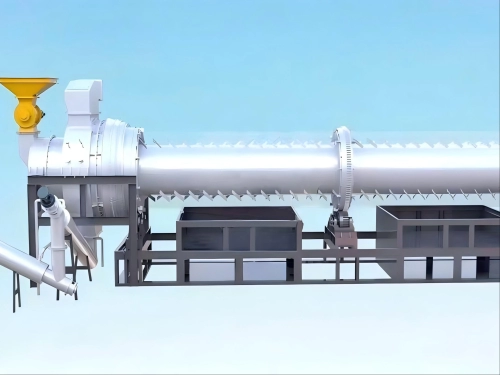
Activated Carbon Furnace Applications | Waste Carbon Reuse for Water Treatment, Chemical, Gold Mining Industry
Our activation furnaces serve wastewater plants, chemical factories, gold mines, landfill leachate t