Dual-Shaft Shredder: The Key Equipment Solving the First-Step Challenge in Industry
On many factory floors and recycling lines, the initial processing stage is often a major headache. Incoming raw materials come in all shapes and sizes—large, small, soft, hard, and often tangled together—easily jamming or damaging standard machinery. The dual-shaft shredder has become increasingly vital precisely because it tackles this primary challenge in the toughest, most reliable way.
It Handles the Toughest Materials
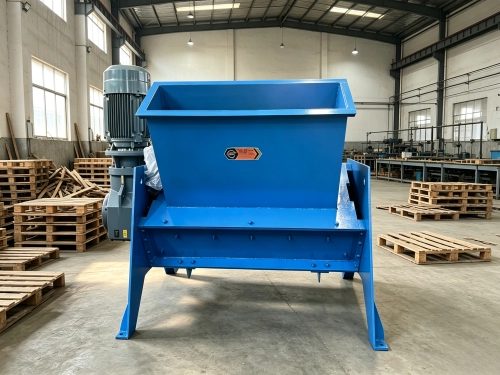
Whether it's whole scrap tires, large plastic sheets, pallets of waste wood, crushed metal drums, or bundled woven bags—materials that challenge other crushing equipment—these are all standard fare for the dual-shaft shredder. Its working principle is straightforward. At its core are two parallel, counter-rotating shafts fitted with specially designed cutters. As material feeds into the machine, these cutters employ powerful shearing and tearing forces to break down irregular, tangle-prone materials into uniform-sized chunks. This ensures the entire production line starts off running smoothly and stably, preventing jams right at the very first stage.
It Creates the Ideal Foundation for Downstream Processes
The benefit of shredding bulky materials isn't just about making them smaller. More importantly, it creates optimal conditions for all subsequent processing steps. The resulting uniform shred size significantly boosts the efficiency of later stages like sorting, separation, or conversion.
For example, in scrap metal recycling, shredded material allows for cleaner metal separation via magnets. Prior to waste-to-energy incineration, pre-shredded material burns more steadily and completely. In plastic recycling for pelletizing, uniform flakes ensure consistent melting quality and the quality of the regenerated pellets. It can be said that this first processing step directly enhances the entire line's throughput capacity and the value of the final product.
It's Built Tough for Long-Term, Stable Operation
For any plant, equipment reliability and minimal downtime are critical. The dual-shaft shredder is designed specifically for high-intensity, high-wear operating conditions. Its structure is exceptionally robust, and its cutters are made from wear-resistant materials, enabling it to withstand the impacts and abrasion from processing diverse, challenging materials. This translates to the ability to operate continuously and stably over long periods, drastically reducing downtime for maintenance or clearing jams. This reliability and durability provide solid assurance for a plant's continuous production and cost control.
Summary
In summary, the dual-shaft shredder plays an irreplaceable role in industry because it solves the initial and most fundamental challenge on a production line in the most effective and reliable manner. It transforms chaotic, raw feedstock into standardized material suitable for automated, downstream processing. It is the essential foundation enabling the efficient operation of numerous resource recovery and material processing lines.
Copyright: Copyright belongs to Hengju Machinery! Reprint please indicate the source: https://www.hengjumachinery.com/industry-news/dualshaft-shredder-the-key-equipment-solving-the-firststep-challenge-in-industry.html
Needs Help? Let’s Get in Touch