Choosing a Tire Shredder: A Clear Guide
Selecting the right shredder for tire recycling requires matching your specific material and output goals to the machine's capabilities. The ideal choice depends on tire type, desired chip size, production volume, and budget constraints. A proper selection maximizes efficiency, reduces downtime, and produces quality feedstock for downstream processes like pyrolysis or crumb rubber production.
Shredder Options at a Glance
Here's a quick comparison of the main shredder types used in tire recycling operations:
| Machine Type | Best For | Key Advantage |
|---|---|---|
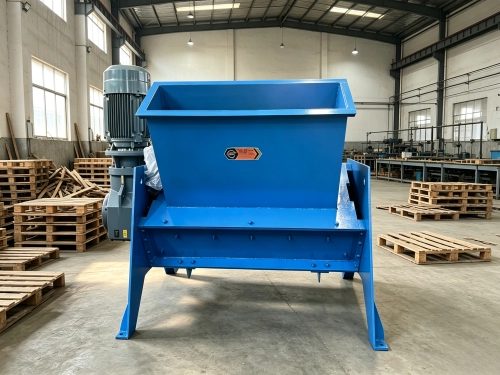
| Heavy-Duty Twin-Shaft | Primary shredding of whole car/truck tires into 50-100mm chips | High torque, handles whole tires with steel belts, cost-effective maintenance |
| Heavy-Duty Single-Shaft | Producing uniform 30-60mm chips for crumb rubber production | Consistent output size with screen control, ideal for secondary shredding |
| Four-Shaft Shredder | Processing massive OTR/mining tires smoothly | Even cutting force for giant tires, lower vibration and noise |
How to Make the Right Choice
Begin with your primary tire type. For standard car and truck tires, a heavy-duty twin-shaft shredder serves as the most efficient workhorse. It handles whole tires directly, including those with steel belts, without requiring pre-processing.
If your operation focuses on giant mining or agricultural tires, you'll need the enhanced power of a large twin-shaft or a four-shaft machine. These provide the necessary torque to process thick rubber and steel reinforcement without stalling.
Consider your downstream process next. For pyrolysis reactors or tire-derived fuel production, coarse chips from a twin-shaft shredder are ideal. If producing high-quality crumb rubber, combine a twin-shaft for primary shredding with a single-shaft for secondary sizing—this two-stage approach delivers precise, clean chips optimized for grinding.
Finally, balance initial investment with operating costs. A robust twin-shaft shredder with rebuildable cutters typically offers the best long-term value for most operations, minimizing maintenance expenses over time.
Key Setup & Recommendations
Your shredder needs proper support equipment. A hydraulic pusher ensures consistent feeding of whole tires and prevents jams at the hopper. Install a magnetic separator immediately after the shredder to extract steel wire—this protects downstream equipment and creates a cleaner rubber stream.
Use heavy-duty, cut-resistant conveyors to handle the sharp steel wire and abrasive rubber chips. For maintenance, maintain proper cutter clearance and rebuild cutting edges before excessive wear occurs. Daily removal of wound wires from shafts prevents operational issues.
For medium-sized operations (1-5 t/h), a twin-shaft shredder (1000-1200 series) with magnetic separation and proper conveying forms a complete primary system. Large-scale production (8-20 t/h) benefits from a combination line: twin-shaft for primary shredding followed by single-shaft for size refinement. This provides optimal control over output quality and overall system efficiency.
Copyright: Copyright belongs to Hengju Machinery! Reprint please indicate the source: https://www.hengjumachinery.com/industry-news/choosing-a-tire-shredder-a-clear-guide.html
Needs Help? Let’s Get in Touch