Why Choose a Flat Die Pellet Mill?
In the world of biomass pellet equipment, flat die and ring die pellet mills are the two most common machine types. Ring die models dominate large-scale production lines, but flat die mills have their own solid reasons for existence. Some of their characteristics actually hit the mark for what many small to medium-scale users truly need.
Simple Structure, Lower Cost
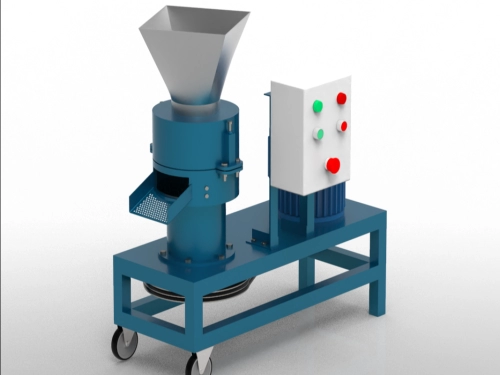
The biggest feature of a flat die pellet mill is its uncomplicated design. Its core components are simply a horizontally placed die and several press rollers—none of the complex transmission and mounting structures found on ring die machines. The direct benefit of this simpler design is lower cost. For equivalent output capacity, a flat die mill comes with a significantly smaller price tag than a ring die model. For users just starting out with limited capital, this is a very real advantage.
Simple structure also means easier maintenance. When the machine's been running a while and you need to replace a die or rollers, you can handle it yourself without calling in specialized technicians. In rural areas or remote locations, that kind of convenience matters.
High Tolerance for Raw Materials
Flat die mills have their own unique approach when it comes to processing materials. The working method involves rollers directly rolling over material spread on the die, forcing it into the holes. This vertical pressure application gives it better adaptability to various "difficult" raw materials.
Long-fiber straw and corn stalks? They won't wrap around or clog in a flat die mill. Lightweight rice husks and grain hulls? They don't get flung everywhere—they stay put and get pressed into the holes. Sawdust containing some bark? Material with slightly higher moisture? A flat die mill handles it. If you're processing sawdust today, switching to straw tomorrow, and trying out some peanut shells the day after, a flat die mill keeps up with these changes without requiring frequent equipment adjustments.
Lower Power Requirements
Flat die pellet mills have another practical advantage: they're less picky about power conditions. Large ring die models basically all require three-phase industrial electricity. Places with unstable voltage or only single-phase power simply can't run them. But some smaller flat die models can operate on single-phase power—meaning regular household current gets them going.
This makes them usable in rural areas, home workshops, or locations with less developed electrical infrastructure. No need to install special three-phase lines just for one machine. That saves a lot of trouble.
Low Maintenance and Operation Threshold
Daily operation and maintenance of a flat die mill don't require extensive technical knowledge. Changing dies, cleaning out residue, adjusting clearances—you can pick these up after watching once. The machine's simple construction means lower failure rates, and even if minor issues pop up, you can probably figure them out yourself.
For small processing operations without dedicated maintenance staff, this peace of mind is valuable. You can keep the machine running yourself without disrupting production.
Built for Small-Batch, Multi-Variety Production
Flat die mills start up fast, stop fast, and handle material changes easily. Making wood pellets today, straw pellets tomorrow, feed pellets the day after—you can switch anytime without wasting too much time or material on changeovers.
This characteristic makes them particularly suitable for scenarios that aren't about round-the-clock continuous production, but rather flexible scheduling based on whatever raw materials are available and whatever orders come in. Whatever material you have on hand, the machine handles it. No fuss, no fatigue.
Summing It Up
The advantages of a flat die pellet mill boil down to a few words: simple, rugged, not picky about materials, low barrier to entry. It doesn't aim to outperform ring die mills in output. Instead, it flexibly meets the diverse needs that fall outside large-scale continuous production. If your production volume is modest, your raw material sources vary, your budget is limited, or you're operating in a rural setting, a flat die mill is a very practical choice.
Copyright: Copyright belongs to Hengju Machinery! Reprint please indicate the source: https://www.hengjumachinery.com/industry-news/why-choose-a-flat-die-pellet-mill-.html
Needs Help? Let’s Get in Touch