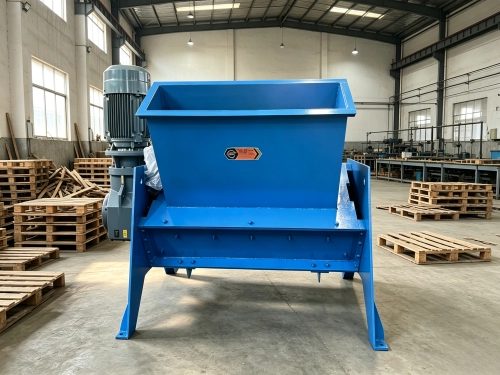
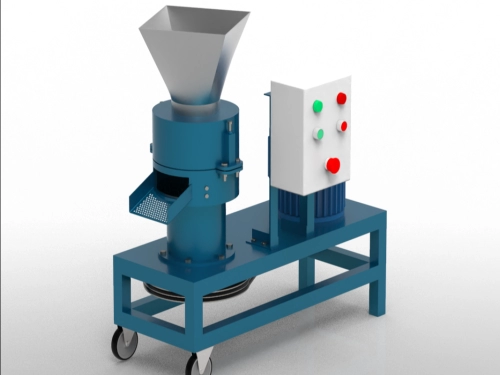
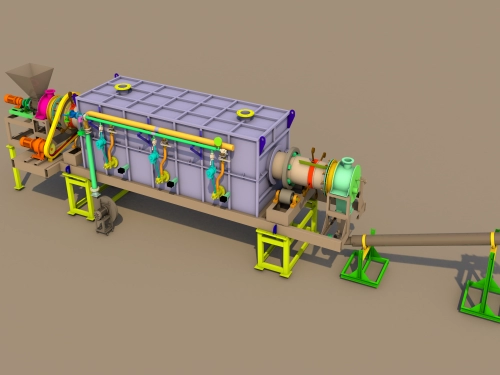
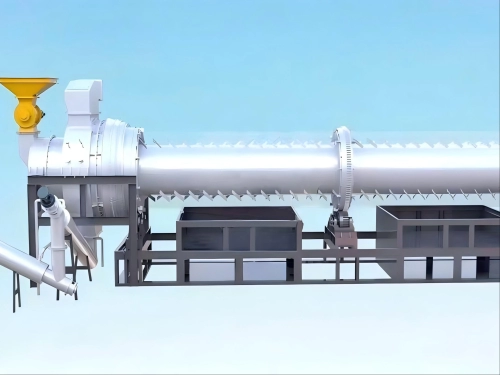
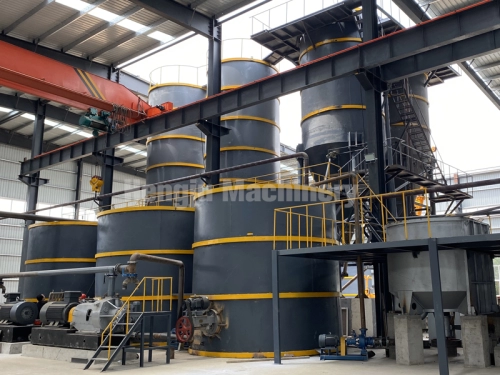
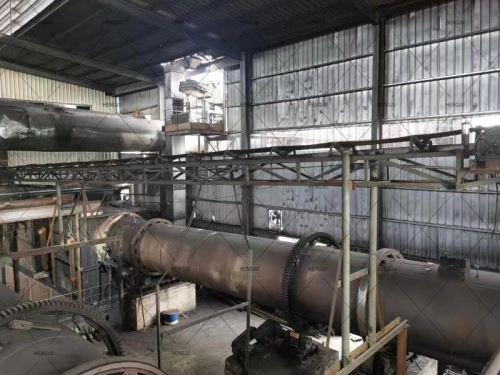
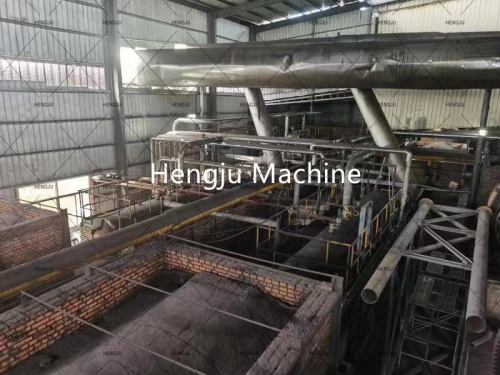
The carbonization furnace converts raw materials (coconut shell, wood, bamboo, coal) into high-performance activated carbon via oxygen-free heating at 400–600°C, followed by activation. This main product has a porous structure, large specific surface area (800–1500 m²/g), and strong adsorption capacity.
Key Specifications of Finished Activated Carbon
Iodine Value: 800–1200 mg/g (coconut shell: ≥1000 mg/g)
Moisture: ≤10%
Ash Content: ≤3–8%
Hardness: ≥90%
Particle Size: 1–5 mm (customizable)
Common Types & Applications
Coconut Shell Activated Carbon
Microporous, high iodine value. Used for drinking water purification, gold recovery, air filtration.
Wood/Bamboo Activated Carbon
Mesoporous, low ash. Ideal for food decolorization, wastewater treatment, VOC removal.
Coal-Based Activated Carbon
Mixed pores, low cost. Applied in industrial exhaust, gas adsorption, solvent recovery.
Advantages of Our Furnace Output
Consistent Quality: Uniform carbonization & activation, stable pore structure.
High Yield: 30–45% carbon yield from raw materials.
Eco-Friendly: Low heavy metal content, meets international standards.
Copyright: Copyright belongs to Hengju Machinery! Reprint please indicate the source: https://www.hengjumachinery.com/industry-news/what-is-activated-carbon-from-carbonization-furnace.html
Needs Help? Let’s Get in Touch