What is the working principle of a metal crusher?
Metal shredders are mainly used for the recycling and crushing of various scrap metals, such as aluminum cans, corrugated steel tiles, scrapped cars, paint buckets, and aluminum and iron. They achieve fine crushing of scrap metal, thus improving transportation costs and reducing recycling costs.
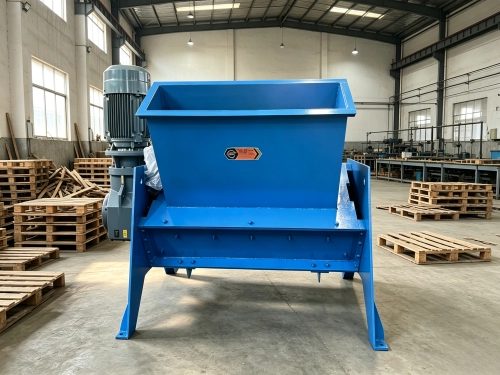
The core principle of a metal shredder is based on the impact of hammers. Driven by a high-speed, high-torque motor, the hammers on the rotor alternately strike the material to be crushed inside the crushing chamber. Through the space between the liner and the hammers, the material is torn into smaller pieces that meet specific dimensions.
The main casing of the equipment is made of steel plate, lined with high-manganese cast steel to protect the outer body. The rotor employs a disc-type fastening and rotating mechanism, with several steel discs mounted on a horizontal shaft (the number and diameter of the discs vary depending on the model). The main shaft is supported by ball bearings, with forced lubrication and cooling via circulating oil, and is equipped with a temperature sensor to ensure stable high-speed operation. The crushing of scrap steel is accomplished through the cooperation of the casing and the main shaft.
The metal shredder crushes various scrap metal items such as aluminum cans, cola cans, paint buckets, scrap sheet metal, scrap iron slag, metal bottles, aluminum cans, and tin cans into granular aggregates, thereby reducing transportation costs and increasing the speed of scrap iron smelting. During operation, the material is thoroughly and effectively crushed within the crushing chamber, resulting in uniformly fine output.
Copyright: Copyright belongs to Hengju Machinery! Reprint please indicate the source: https://www.hengjumachinery.com/industry-news/what-is-the-working-principle-of-a-metal-crusher.html
Needs Help? Let’s Get in Touch